Rats and mice are among the most destructive and dangerous pests affecting Kenyan homes, restaurants, warehouses, farms, and commercial properties. They contaminate food supplies, spread life-threatening diseases, chew through electrical wiring causing fires, and damage stored goods worth millions of shillings every year. In Kenya’s rapidly growing urban centres — Nairobi, Mombasa, Kisumu, Nakuru, and Eldoret — rodent populations are increasing, driven by poor waste management, rapid construction, and the abundance of food sources in densely populated areas.
Unlike many other pests, rats and mice are intelligent, cautious, and highly adaptable. A female rat can produce up to 84 offspring per year. Left unchecked, a small rodent problem can escalate into a full-blown infestation within weeks, making early and decisive action absolutely critical.
This comprehensive 2026 guide from Pestraid Kenya covers everything you need to know about identifying rodents, choosing the best products, applying the most effective control methods, and protecting your property long-term.
📞 Call or WhatsApp Pestraid Kenya: 0710907628 ✉️ Email: sales@pestraid.co.ke
Table of Contents
- Why Rats and Mice Are a Serious Threat in Kenya
- Common Rodent Species Found in Kenya
- Warning Signs of a Rodent Infestation
- Where Rats and Mice Hide and Nest
- Rodent Control Methods Explained
- Best Rat and Mice Control Products in Kenya (2026 Comparison)
- Our Top Recommended Rodent Control Products
- Step-by-Step Professional Rodent Control Process
- Step-by-Step DIY Rat and Mice Elimination Guide
- Rodent Control for Businesses and Commercial Properties
- How to Prevent Rats and Mice from Returning
- Frequently Asked Questions
- Contact Pestraid Kenya
1. Why Rats and Mice Are a Serious Threat in Kenya
Rodents are not simply a nuisance. They represent a genuine threat to human health, food security, and property integrity. Here is why rodent control should be taken seriously across Kenya:
Disease Transmission Rats and mice are carriers of over 35 diseases that can be transmitted directly to humans through bites, contact with urine and droppings, or indirectly through fleas, ticks, and mites that feed on infected rodents. In Kenya, the most significant diseases associated with rodents include:
- Leptospirosis — spread through rat urine contaminating water and soil; a serious bacterial infection causing fever, kidney failure, and in severe cases, death
- Plague (Bubonic Plague) — historically devastating and still recorded in East Africa; spread via rat fleas
- Salmonellosis — food poisoning caused by Salmonella bacteria from rodent droppings contaminating food preparation surfaces
- Rat-bite Fever — bacterial infection transmitted through rodent bites or scratches
- Hantavirus — spread through contact with infected rodent urine, droppings, or saliva
- Murine Typhus — spread by fleas from infected rats
Food Contamination and Economic Loss A single rat consumes approximately 25–30 grams of food per day but contaminates up to ten times that amount through droppings, urine, and hair. In Kenya’s food storage facilities, supermarkets, restaurants, and farm stores, rodent infestations result in enormous food wastage and regulatory penalties.
Property and Infrastructure Damage Rats and mice gnaw constantly to keep their incisor teeth worn down. They chew through electrical cables (a leading cause of unexplained fires in Kenyan homes and businesses), water pipes, gas lines, insulation, packaging, documents, clothing, and structural materials. The damage to a business’s stock, equipment, and reputation from a rodent infestation can be catastrophic.
Rapid Reproduction A female Norway rat reaches sexual maturity at 5 weeks and can produce a litter of 6–12 pups every 3 weeks. This means a pair of rats can theoretically produce over 1,000 descendants in a single year under ideal conditions. Speed of response is therefore critical — the longer an infestation is left untreated, the more difficult and expensive elimination becomes.
Pestraid Kenya Expert Insight: Many Nairobi businesses contact us only after rodents have already caused significant damage — chewed wiring, contaminated stock, or a failed health inspection. Monthly rodent monitoring and prevention programmes cost a fraction of the damage and reputational loss that comes from an uncontrolled infestation.
2. Common Rodent Species Found in Kenya
Kenya is home to several rodent species, each with different behaviours, preferred habitats, and responses to control methods. Correct identification is the foundation of an effective control strategy.
| Species | Common Name | Size (body) | Weight | Preferred Habitat | Key Characteristics | Threat Level |
|---|---|---|---|---|---|---|
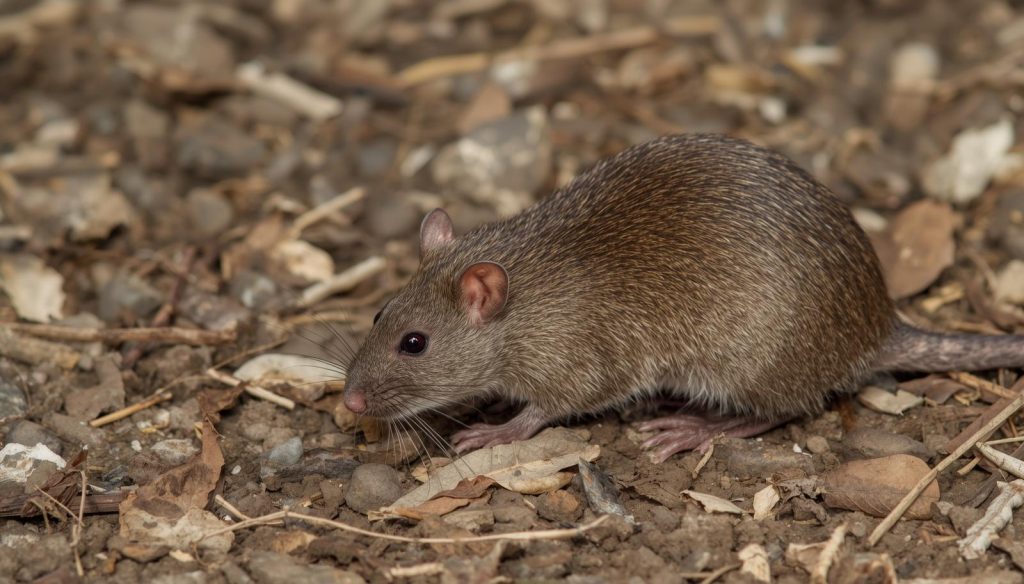
| Rattus norvegicus | Norway / Brown Rat | 20–28 cm | 200–500g | Burrows, sewers, basements, ground level | Excellent swimmer; aggressive; burrows in soil | 🔴 Very High |
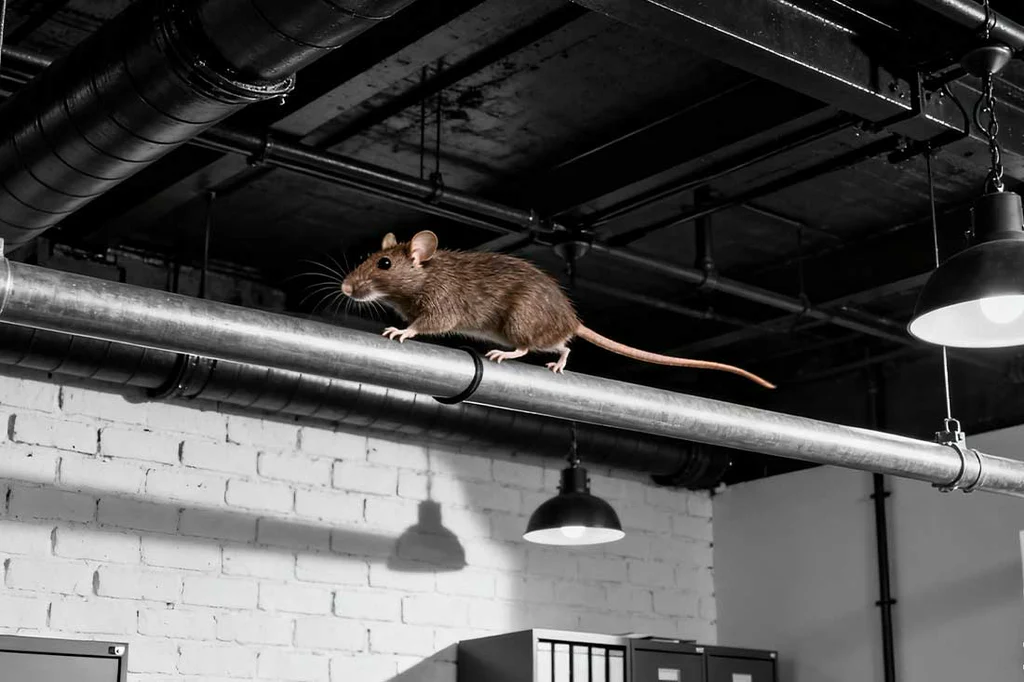
| Rattus rattus | Black / Roof Rat | 16–24 cm | 115–350g | Roofs, ceilings, trees, upper floors | Excellent climber; enters through roof gaps | 🔴 Very High |
| Mus musculus | House Mouse | 7–10 cm | 12–30g | Inside walls, kitchens, storage areas | Tiny — enters through 6mm gaps; very prolific | 🔴 High |
| Mastomys natalensis | Multimammate Rat | 10–17 cm | 30–80g | Rural and peri-urban areas, farmland | Key Lassa fever host; extremely prolific breeder | 🟠 High |
| Arvicanthis niloticus | African Grass Rat | 12–20 cm | 60–175g | Gardens, farms, grassland near buildings | Damages crops and garden produce | 🟡 Moderate |
Key Insight for Kenyan Homeowners: The Norway Rat and Roof Rat are by far the most common rodent pests in Nairobi and urban Kenya. Norway Rats live at ground level and burrow under buildings, while Roof Rats live in ceilings, attic spaces, and wall cavities. They require different trap placement and bait station positioning for effective control.
3. Warning Signs of a Rodent Infestation
Rats and mice are primarily nocturnal and extremely cautious — most Kenyan homeowners never see a live rodent even when their property is heavily infested. Here are the signs to look and listen for:
Droppings Rodent droppings are the most common and reliable sign of infestation. Norway Rat droppings are dark, capsule-shaped, and 18–20mm long. Roof Rat droppings are thinner and slightly curved. Mouse droppings are tiny — only 3–6mm long, resembling a dark grain of rice. Fresh droppings are soft and shiny; old droppings are hard and grey.
Gnaw Marks Look for gnaw marks on food packaging, wooden furniture, skirting boards, electrical cables, and structural materials. Fresh gnaw marks are lighter in colour and have rough edges. Rat teeth marks are larger (4mm+) than mouse teeth marks (1–2mm).
Scratching and Squeaking Sounds Scratching, gnawing, and squeaking sounds inside walls, above ceilings, under floors, or in roof spaces — particularly at night — are a strong indicator of rodent activity.
Grease Marks (Smear Marks) Rats repeatedly follow the same pathways along walls and pipes. The natural oils and dirt on their fur leave dark, greasy smear marks along walls, pipes, and beams at floor level. These tracks are especially visible on light-coloured painted surfaces.
Burrows Norway Rats excavate burrows in soil, under paving, along building foundations, in garden banks, and beneath rubbish heaps. Active burrows have freshly excavated soil at the entrance and no cobwebs inside.
Nests Rodents build nests from shredded paper, fabric, insulation, and plant material. Nests are typically found inside walls, under floors, in ceiling insulation, inside stored boxes, and behind kitchen appliances.
Footprints and Tail Drag Marks In dusty or muddy areas, look for small footprints and tail drag marks. A simple test: sprinkle flour or talcum powder along a suspected runway and check for prints the following morning.
Damaged Food Packaging Chewed food bags, boxes, and containers in kitchen cupboards, storerooms, and pantries — especially around the corners and base — are clear signs of rodent feeding activity.
Pet Behaviour Cats and dogs often become agitated, sniff at walls, or paw at specific areas of flooring or skirting when they detect rodents. Pay attention to persistent unusual pet behaviour.
4. Where Rats and Mice Hide and Nest
Understanding rodent harborage sites is essential for effective bait placement and exclusion work.
| Location | Species Most Likely | What to Look For |
|---|---|---|
| Roof space and ceiling void | Roof Rat | Droppings, nests, gnaw marks on timber and wiring |
| Kitchen behind and under appliances | House Mouse, Roof Rat | Droppings, grease marks, food debris, gnaw marks |
| Wall cavities | All species | Scratching sounds, grease marks at entry holes |
| Under concrete slab and flooring | Norway Rat | Burrow entrances, subsidence near foundations |
| Sewers and drain systems | Norway Rat | Entry via broken drain covers, toilet bowl entry |
| Store rooms and warehouses | All species | Gnawed packaging, nests inside stock, droppings |
| Garden and boundary walls | Norway Rat | Burrow entrances along wall base, runs in vegetation |
| Under kitchen sink plumbing | All species | Entry via pipe gaps in walls, droppings, grease marks |
| Garage and outbuildings | All species | Nests in stored materials, gnawed boxes |
| Compost heaps and refuse areas | Norway Rat | Burrows inside and around compost bins |
5. Rodent Control Methods Explained
Effective rodent control in Kenya relies on an Integrated Pest Management (IPM) approach — combining multiple methods simultaneously rather than relying on a single tool. Here is a comparison of all available methods:
| Control Method | How It Works | Effectiveness | Best For | Limitations |
|---|---|---|---|---|
| Second-Generation Anticoagulant Rodenticide (SGAR) | Rodents feed on bait containing brodifacoum or bromadiolone; die within 4–10 days from internal bleeding | Very High | All species, commercial and domestic use | Risk of secondary poisoning to raptors and pets if carcasses not removed |
| First-Generation Anticoagulant Rodenticide (FGAR) | Similar to SGAR but requires multiple feeds over several days | High | Resistant to secondary poisoning risk, ongoing monitoring stations | Slower acting; some rodent populations show resistance |
| Snap Traps | Mechanical trap kills rodent instantly on trigger | High | House mice, targeted Norway Rat control | Must be checked and reset daily; requires correct placement |
| Live Capture Traps | Cage traps rodents alive for relocation or humane dispatch | Moderate | Sensitive environments, low infestations | Rodents become trap-shy quickly; caught rodents must be dispatched humanely |
| Electronic Traps | High-voltage shock kills rodent instantly; indicator light signals activation | High | Indoor use, food businesses, offices | Higher cost; requires regular battery/power check |
| Glue Boards | Adhesive board traps rodents on contact | Moderate | Mice, monitoring tool | Inhumane if not checked frequently; not suitable for heavy infestations |
| Ultrasonic Repellers | Emit high-frequency sound waves claimed to repel rodents | Very Low — not recommended | No proven effectiveness against established infestations | Rodents habituate rapidly — not a reliable control method |
| Exclusion (Proofing) | Physical sealing of all entry points | Very High — permanent | All situations — prevents re-infestation | Must be combined with elimination of existing population first |
| Professional Fumigation | Gas fumigation of enclosed spaces | Very High | Severe infestations in sealed structures | Requires evacuation; not suitable for ongoing control |
6. Best Rat and Mice Control Products in Kenya (2026 Comparison)
| Product | Type | Active Ingredient | Kill Speed | Safety Considerations | Best For | Rating |
|---|---|---|---|---|---|---|
| Ditrac Blox (Brodifacoum) | SGAR Rodenticide Bait Block | Brodifacoum 0.005% | 4–10 days | Use inside tamper-resistant bait stations only | Norway Rats, Roof Rats, all species | ⭐⭐⭐⭐⭐ |
| Racumin (Coumatetralyl) | FGAR Rodenticide | Coumatetralyl 0.0375% | 5–14 days | Lower secondary poisoning risk than SGARs | Ongoing monitoring programmes, farms | ⭐⭐⭐⭐ |
| Ratimor Bromadiolone | SGAR Rodenticide | Bromadiolone 0.005% | 4–8 days | Use in tamper-resistant stations | Severe infestations, warehouses | ⭐⭐⭐⭐⭐ |
| Selontra (Cholecalciferol) | Non-anticoagulant Rodenticide | Cholecalciferol 0.075% | 3–7 days | Very low risk of secondary poisoning — safe around raptors | Anticoagulant-resistant rodents, near water bodies | ⭐⭐⭐⭐⭐ |
| Victor Professional Snap Traps | Mechanical Snap Trap | N/A — mechanical | Instant | Safe when placed inside tamper-resistant stations | House mice, targeted rat control | ⭐⭐⭐⭐ |
| Protecta LP Bait Stations | Tamper-Resistant Bait Station | N/A — housing unit | N/A | Child and pet-safe housing for rodenticide blocks | Commercial premises, homes with children/pets | ⭐⭐⭐⭐⭐ |
| Rentokil Rat & Mouse Killer | SGAR Rodenticide Bait | Brodifacoum-based | 4–8 days | Use with care around pets | Domestic use, supermarket accessible | ⭐⭐⭐ |
Pestraid Kenya Note: Brodifacoum-based rodenticides (Ditrac, Ratimor) are the most effective single-feed rodenticides available in Kenya. However, they must always be used inside tamper-resistant bait stations — never placed in open areas where children, pets, or wildlife can access them. The non-anticoagulant Selontra (Cholecalciferol) is an excellent alternative for properties near wildlife areas, farms with livestock, or where secondary poisoning risk is a concern.
7. Our Top Recommended Rodent Control Products
🥇 #1 Best Overall: Ditrac Blox (Brodifacoum 0.005%)
Ditrac Blox is the professional gold standard for rodent control across Kenya and East Africa. The brodifacoum active ingredient is a second-generation anticoagulant — one of the most powerful rodenticides available. A single feed is sufficient to deliver a lethal dose, making it highly effective even against bait-shy rodents. The block design allows it to be secured inside tamper-resistant bait stations, making deployment safe and professional.
Why Pestraid Kenya recommends it:
- Single-feed lethal dose — highly effective on bait-shy rats
- Works on all rodent species present in Kenya
- Block format secures inside tamper-resistant stations
- Palatability enhanced with food attractants — rodents readily accept it
- Used by professional pest controllers across Kenya and East Africa
Best for: Severe Norway Rat and Roof Rat infestations in homes, commercial kitchens, warehouses, and food businesses.
🥈 #2 Best for Anticoagulant-Resistant Rodents: Selontra (Cholecalciferol 0.075%)
Selontra represents a major advancement in rodent control. It uses Cholecalciferol (a form of Vitamin D3) rather than anticoagulants, making it highly effective against rodent populations that have developed resistance to brodifacoum and bromadiolone — an increasingly common problem in urban Kenya. It kills through hypercalcaemia (excess calcium in the blood) within 3–7 days of a single feed.
Why Pestraid Kenya recommends it:
- Effective against anticoagulant-resistant rodent populations
- Significantly lower secondary poisoning risk — safer around raptors and pets
- Fast-acting compared to first-generation anticoagulants
- Ideal for use near water bodies, wildlife areas, and organic farms
- Compliant with strict food business health and safety requirements
Best for: Urban rodent populations showing resistance to standard poisons, farms, properties near wildlife areas, food processing facilities.
🥉 #3 Best Mechanical Option: Victor Professional Snap Traps
For targeted, chemical-free rodent control — particularly for house mice indoors — Victor Professional Snap Traps are the most reliable mechanical option available in Kenya. They deliver an instant, humane kill and can be reused indefinitely. When placed correctly along rodent runways and inside bait stations, their catch rate rivals chemical treatments for mouse infestations.
Why Pestraid Kenya recommends it:
- No chemicals — completely safe around children and pets when used correctly
- Instant kill — no suffering, no rodent dying inside walls
- Reusable — cost-effective for ongoing monitoring
- Can be baited with peanut butter, chocolate, or nesting material
- Ideal for food businesses where rodenticide use is restricted
Best for: House mouse control, food preparation areas, indoor targeted control, environments where rodenticide use is not permitted.
🏅 #4 Best Bait Station: Protecta LP Tamper-Resistant Bait Station
No rodenticide programme is complete without tamper-resistant bait stations. The Protecta LP is the most widely used professional bait station in Kenya — a lockable, robust plastic housing that secures rodenticide blocks inside, preventing access by children, pets, and non-target wildlife while allowing rodents to enter freely. It also protects bait from moisture and contamination, extending its effective life significantly.
Why Pestraid Kenya recommends it:
- Child and pet-proof locking mechanism
- Compatible with all standard rodenticide block formats
- Weather-resistant for indoor and outdoor use
- Low-profile design fits along walls and in tight spaces where rodents travel
- Professional appearance — essential for food business compliance
Best for: All commercial and domestic rodenticide programmes — should be used with every chemical rodent treatment.
📞 To order rodent control products or book a professional treatment, contact Pestraid Kenya:
- Phone / WhatsApp: 0710907628
- Email: sales@pestraid.co.ke
8. Step-by-Step Professional Rodent Control Process
When Pestraid Kenya carries out a professional rodent control programme, we follow a structured, multi-stage process proven to achieve complete elimination and long-term prevention.
Step 1: Full Property Survey and Rodent Activity Assessment Our certified technician conducts a thorough inspection of the entire property — interior and exterior. We identify the rodent species present, map all active runways, harborage sites, entry points, and feeding areas. We assess the severity of the infestation and identify the conditions (food sources, water, shelter) that are sustaining it.
Step 2: Sanitation and Harborage Reduction Recommendations Before any control measures are deployed, we advise on immediate sanitation improvements — securing food waste, removing debris, cutting back overgrown vegetation, and eliminating water sources. Rodent control without sanitation improvement is always a short-term fix.
Step 3: Strategic Bait Station Installation Tamper-resistant bait stations loaded with professional-grade rodenticide (Ditrac Blox or Selontra depending on the situation) are installed at strategic intervals — along walls, behind appliances, inside roof spaces, around the building perimeter, and near identified burrow entrances. Stations are positioned on rodent runways where they will intercept rodents in their natural travel paths.
Step 4: Snap Trap and Live Trap Deployment (Where Required) In areas where rodenticide use is restricted (food preparation surfaces, children’s play areas), snap traps are deployed with appropriate bait. In live-catch situations, cage traps are set and checked daily.
Step 5: Entry Point Exclusion Work All identified rodent entry points are sealed using appropriate materials — steel wool and expanding foam for small gaps, cement and metal mesh for larger openings, and door sweeps for gaps under doors. Exclusion is the single most important long-term prevention measure.
Step 6: First Follow-Up Visit (7–10 Days) We return to check all bait stations and traps, record activity levels, replace consumed bait, reposition stations based on activity patterns, and remove any rodent carcasses. This visit is critical — it tells us whether the treatment is working and whether any adjustment is needed.
Step 7: Second Follow-Up Visit (21–28 Days) A final assessment visit confirms that rodent activity has ceased, all stations are inactive, and no new entry points have been created. We provide a written treatment completion report and recommend an ongoing monitoring frequency.
Step 8: Ongoing Monitoring Programme For commercial properties, food businesses, and high-risk residential properties, Pestraid Kenya offers monthly or quarterly rodent monitoring contracts. Permanent bait stations are maintained on-site, checked on each visit, and activity levels are logged. This provides continuous protection and early warning of any new rodent pressure.
9. Step-by-Step DIY Rat and Mice Elimination Guide
For homeowners dealing with a mild to moderate rodent problem, this step-by-step process — using professional-grade products — will deliver effective results:
Step 1: Confirm the Species Identify whether you are dealing with Norway Rats (ground level, burrows), Roof Rats (ceiling, roof space), or House Mice (inside walls, kitchen areas). This determines where to place bait and traps.
Step 2: Remove All Food Sources Store all food in rodent-proof airtight containers. Remove pet food bowls at night. Secure bin lids. Clean up all food debris from kitchen surfaces, floors, and behind appliances. Rodents will not reliably take bait if easier food sources are available.
Step 3: Purchase Tamper-Resistant Bait Stations Never place rodenticide in open areas. Purchase Protecta LP or equivalent lockable bait stations. This protects children, pets, and non-target animals.
Step 4: Load Stations with Professional Rodenticide Place 1–2 blocks of Ditrac Blox or Ratimor Bromadiolone inside each bait station. Secure the block on the internal spike or anchor point.
Step 5: Position Stations Correctly Place bait stations flush against walls, in dark corners, and along known rodent runways. For Roof Rats, place stations in the ceiling void and along roof beams. For Norway Rats, place stations near burrow entrances and along the building exterior. For mice, place stations every 2–3 metres along walls inside the property.
Step 6: Deploy Snap Traps in the Kitchen Along kitchen walls, behind the fridge, and under the sink — set snap traps baited with peanut butter, chocolate, or a small piece of dried meat. Check and reset daily. Wear gloves when handling traps and dead rodents.
Step 7: Check and Replenish Every 3–4 Days Check all bait stations every 3–4 days. Replace consumed bait. Remove and safely dispose of any dead rodents in a sealed plastic bag in the outside bin. Wear gloves — never handle rodent carcasses with bare hands.
Step 8: Seal All Entry Points Once activity begins to reduce, seal all identified entry points — gaps around pipes, holes in skirting boards, gaps under doors, broken air bricks, and gaps in roof eaves. Use steel wool packed into gaps followed by expanding foam or cement. Rodents can chew through wood, plastic, and soft materials but cannot chew through steel wool or metal.
Step 9: Continue for a Full 4 Weeks Maintain the treatment programme for a minimum of 4 weeks after the last rodent activity is observed. This ensures all members of the colony have had access to bait and that no new rodents are entering from outside.
Warning: Never place rodenticide bait in open areas, on kitchen surfaces, or anywhere accessible to children or pets. Always use tamper-resistant bait stations. If you are unsure, call Pestraid Kenya on 0710907628.
10. Rodent Control for Businesses and Commercial Properties in Kenya
Rodent infestations in commercial properties carry consequences far beyond those in residential settings. A single rodent sighting by a customer, health inspector, or food safety auditor can result in immediate closure by the Kenya Bureau of Standards (KEBS) or county public health officers, revocation of food handling licences, severe reputational damage and loss of customers, legal liability for food contamination incidents, and costly stock write-offs and equipment damage.
Industries most at risk in Kenya include:
| Industry | Primary Rodent Risks | Recommended Programme |
|---|---|---|
| Restaurants and food service | Food contamination, health inspection failure, brand damage | Monthly monitoring with permanent bait stations |
| Supermarkets and retail food stores | Stock damage, contamination, KEBS compliance | Monthly inspection and bait station maintenance |
| Hotels and hospitality | Guest complaints, reputational damage, online reviews | Monthly monitoring — zero-tolerance policy |
| Hospitals and healthcare | Disease transmission risk, sterilisation compromise | Monthly inspection, exclusion-first approach |
| Warehouses and logistics | Stock damage, packaging destruction, fire risk from gnawed wiring | Monthly monitoring with perimeter bait stations |
| Schools and educational institutions | Child safety, disease risk | Termly inspection, exclusion-focused programme |
| Farms and agricultural properties | Crop and grain storage losses, Leptospirosis risk | Quarterly treatment with perimeter control |
Pestraid Kenya offers bespoke commercial rodent control contracts for all business types. Our programmes include scheduled visits, detailed service reports suitable for health audits, KEBS inspections and food safety certifications, and emergency call-out response within 24 hours.
📞 Contact us for a commercial quotation: 0710907628 | sales@pestraid.co.ke
11. How to Prevent Rats and Mice from Returning
Eliminating an existing rodent population is only half the battle. Without structural and sanitation improvements, new rodents will reinvade from surrounding areas within weeks. Implement these measures to maintain a rodent-free property:
| Prevention Measure | Action Required | Priority |
|---|---|---|
| Seal all entry points | Fill gaps around pipes, cables, and vents with steel wool and cement or metal mesh. Fit door sweeps to all exterior doors. | Critical |
| Secure all food waste | Use metal or heavy-duty plastic bins with lockable lids. Never leave food waste in open bags overnight. | Critical |
| Remove outdoor harborage | Clear dense vegetation, debris piles, old timber stacks, and junk from around the building exterior. | High |
| Fix all leaking pipes and taps | Eliminate standing water — rodents need daily water to survive and are attracted to moisture. | High |
| Store dry food in airtight containers | Decant rice, flour, maize flour, and pet food into sealed metal or heavy-duty plastic containers. | High |
| Remove compost heaps near the building | Relocate compost bins at least 5 metres from the structure and use a rodent-proof design. | High |
| Cut back tree branches near the roofline | Roof Rats use overhanging branches as highways onto rooftops and into ceiling voids. | High |
| Install permanent bait stations on the perimeter | Low-profile bait stations around the building exterior intercept incoming rodents before they enter. | High |
| Schedule quarterly inspections with Pestraid Kenya | Professional eyes catch new activity before it becomes a serious infestation. | Essential |
| Train staff (for businesses) | Staff should know how to report rodent signs immediately and follow food storage protocols. | Essential for businesses |
12. Frequently Asked Questions
How much does professional rat control cost in Kenya?
Professional rodent control in Kenya typically costs between KSh 3,000 and KSh 25,000 for residential properties, depending on property size and infestation severity. Commercial programmes are priced based on property size and monitoring frequency. Contact Pestraid Kenya at 0710907628 for a free inspection and quote.
How long does it take to get rid of rats and mice completely?
With professional-grade rodenticides, rodent activity typically reduces significantly within 5–7 days and is eliminated within 2–4 weeks. Complete elimination depends on the severity of the infestation, effectiveness of exclusion work, and whether sanitation improvements are made simultaneously. DIY treatments without exclusion work typically result in re-infestation within weeks.
What is the fastest way to get rid of rats in Kenya?
The fastest results come from a combination of professional-grade rodenticide bait (Ditrac Blox or Ratimor) in tamper-resistant stations, snap traps in active runways, and immediate sealing of all entry points — all deployed simultaneously by a professional pest controller. Contact Pestraid Kenya for same-day or next-day service in Nairobi.
Are rat poisons safe to use around children and pets in Kenya?
Rodenticide bait blocks must always be used inside tamper-resistant, lockable bait stations — never placed openly. When used correctly inside proper stations, they present minimal risk to children and pets. Selontra (Cholecalciferol-based) rodenticide has a significantly lower secondary poisoning risk and is the preferred option in homes with pets. Always follow label instructions and consult Pestraid Kenya if you are unsure.
Can rats enter through the toilet in Kenya?
Yes. Norway Rats are excellent swimmers and can enter buildings through broken or poorly sealed sewer connections and drain systems — including toilets. This is a known issue in some older Nairobi properties. If you suspect sewer entry, a professional inspection of drain integrity is recommended alongside rodent control treatment.
Why do I keep seeing rats even after using poison?
Several reasons can explain persistent activity after poisoning: the rodenticide may not be placed correctly on active runways; bait shyness may mean rodents are avoiding unfamiliar objects near the bait; the entry points have not been sealed so new rodents continue entering; or the population may be anticoagulant-resistant. Contact Pestraid Kenya — we can identify the specific cause and apply the appropriate solution.
What smells keep rats away?
While certain smells (peppermint oil, ammonia, mothballs) are widely promoted as rat repellents, they have no proven sustained effectiveness against established rodent populations. Rodents rapidly habituate to strong smells, and these remedies do not address the underlying attractants — food, water, and shelter. Professional exclusion and rodenticide treatment are the only reliably effective approaches.
How do I know if I have rats or mice?
The easiest way to distinguish them is by droppings. Rat droppings are 18–20mm long (Norway Rat) or 12mm long (Roof Rat), dark, and capsule-shaped. Mouse droppings are tiny — only 3–6mm, resembling a dark grain of rice. Gnaw marks from rats are also much larger than those from mice. If unsure, call Pestraid Kenya for a professional identification and assessment.
Is it dangerous to clean up rat droppings myself?
Yes. Rat droppings, urine, and nesting materials can contain Hantavirus and other pathogens. Always wear gloves and a mask when cleaning rodent-infested areas. Do not sweep or vacuum dry droppings — this aerosolises particles. Instead, spray the area with a disinfectant solution, allow 5 minutes contact time, then wipe up with disposable paper towels and dispose of in a sealed plastic bag.
13. Contact Pestraid Kenya — Professional Rat and Mice Control
Pestraid Kenya is a trusted, certified pest control company serving residential, commercial, industrial, and agricultural clients across Kenya. Our rodent control experts use the latest professional products and integrated pest management techniques to eliminate rats and mice safely, efficiently, and permanently.
Our rodent control services include:
- Free property inspection and rodent activity assessment
- Professional rodenticide bait station installation and monitoring
- Snap trap deployment and management
- Full property exclusion and proofing consultation
- Emergency rodent call-out response in Nairobi (within 24 hours)
- Commercial rodent monitoring contracts with service reports for health audits
- Staff training on rodent awareness and food safety compliance
- Written treatment reports for KEBS, health inspections, and property managers
📞 Phone / WhatsApp: 0710907628 ✉️ Email: sales@pestraid.co.ke 🏢 Brand: Pestraid Kenya
Do not allow rats and mice to put your family’s health, your business’s reputation, or your property at risk. Contact Pestraid Kenya today for a free consultation and fast, professional rodent elimination.
Call 0710907628 now — we serve clients across Nairobi and Kenya.
Pestraid Kenya — Your Trusted Pest Control Partner in Kenya | sales@pestraid.co.ke | 0710907628