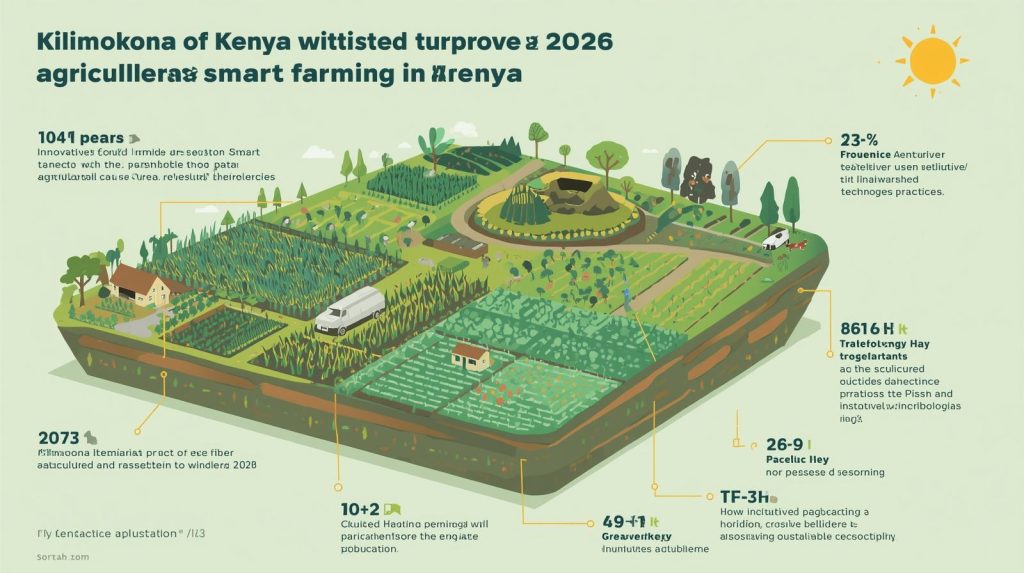
The New Face of Kenyan Agriculture: Technology Meets Tradition
Kenya’s agricultural landscape is undergoing a dramatic transformation. Gone are the days when farming success depended solely on backbreaking labor and favorable weather patterns. Today’s Kenyan farmers are embracing smart farming technologies, precision agriculture, and data-driven decision-making to maximize productivity while conserving resources. At the heart of this agricultural revolution stands Kilimokona, Kenya’s premier supplier of modern farming solutions that bridge the gap between traditional agricultural wisdom and cutting-edge farming technology.
With over 75% of Kenya’s population depending on agriculture for their livelihoods and the sector contributing approximately 33% to the national GDP, the stakes have never been higher. Climate change, unpredictable rainfall patterns, and increasing food demand from a rapidly growing population—projected to reach 81 million by 2039—require innovative solutions. Kilimokona addresses these challenges head-on by providing farmers with access to quality inputs, modern equipment, and the technical knowledge needed to thrive in this new agricultural era.
Understanding Smart Farming: Kenya’s Path to Agricultural Transformation
Smart farming represents the integration of modern technology with agricultural practices to optimize crop production, reduce waste, and increase profitability. In Kenya, this transformation is not just about adopting expensive machinery—it’s about making strategic investments in proven technologies that deliver measurable returns.
What Makes Farming “Smart”?
Smart farming in the Kenyan context encompasses several key elements. Precision water management through drip irrigation systems ensures every drop counts, particularly crucial in a country where 80% of land is classified as arid or semi-arid. Data-driven decision making replaces guesswork with measurable insights about soil health, crop nutrition, and pest management. Quality input optimization means using certified seeds, properly formulated fertilizers, and effective crop protection products that deliver consistent results.
Modern farming techniques can increase yields by up to 20% when properly implemented with quality inputs and appropriate technology. Kilimokona makes these smart farming components accessible to Kenyan farmers of all scales, from smallholder farmers cultivating less than two acres to commercial agricultural enterprises managing hundreds of hectares.
The Climate Change Imperative
Kenya has been experiencing intense droughts followed by torrential rain for nearly a decade, with an estimated 2.2 million Kenyans experiencing food insecurity in March 2025. This climate volatility makes traditional rain-dependent farming increasingly unreliable. Smart farming solutions—particularly irrigation systems, drought-resistant seed varieties, and proper nutrient management—provide farmers with resilience against these unpredictable weather patterns.
Kilimokona’s comprehensive product range directly addresses climate adaptation needs. Drip irrigation systems reduce water consumption by up to 60% compared to traditional methods while maintaining or improving yields. Certified hybrid seeds offer improved drought tolerance and pest resistance. Properly formulated fertilizers maximize nutrient use efficiency, ensuring that every shilling invested in soil fertility delivers maximum returns.
Kilimokona’s Smart Farming Solutions: Building Blocks for Agricultural Success
Modern Irrigation: The Foundation of Climate-Smart Agriculture
Water scarcity represents one of Kenya’s most pressing agricultural challenges. With 95% of crops dependent on rainfall, farmers face devastating losses during drought years. Modern irrigation transforms this vulnerability into opportunity, enabling year-round production regardless of rainfall patterns.
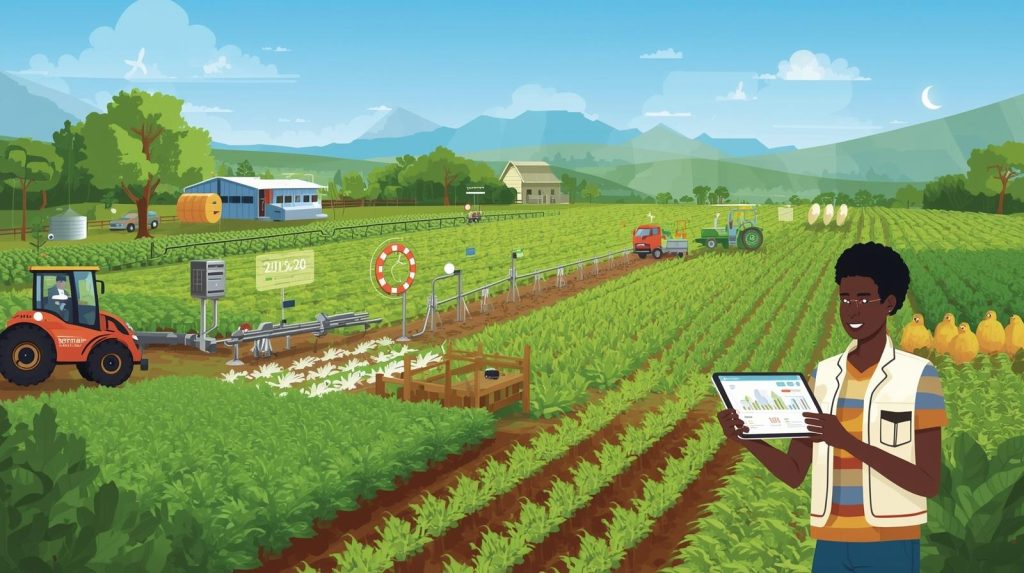
Drip Irrigation Systems: These water-efficient systems have revolutionized Kenyan horticulture and field crop production. A flower farm in Naivasha reduced water use by 40% while increasing flower production by 25% after switching to drip irrigation. Kilimokona supplies complete drip irrigation kits tailored to different crop types and farm sizes, from quarter-acre vegetable gardens to 50-acre commercial farms.
The components available through Kilimokona include drip lines with various emitter spacing (20cm for closely planted vegetables, 40-50cm for row crops), HDPE mainline pipes in sizes from 20mm to 110mm diameter, pressure regulators ensuring consistent water delivery, filtration systems preventing emitter clogging, and fertigation equipment enabling precise nutrient delivery through the irrigation system.
Smart Sprinkler Systems: For crops requiring overhead irrigation, Kilimokona provides modern sprinkler systems including micro-sprinklers for greenhouse applications, impact sprinklers for field crops, and adjustable sprinklers that can be fine-tuned to match crop water requirements at different growth stages.
Solar-Powered Pumping Solutions: Recognizing that many Kenyan farms lack reliable electrical access, Kilimokona offers solar-powered water pumping systems. These off-grid solutions eliminate fuel costs while providing sustainable, environmentally friendly water delivery. Solar pumps are particularly valuable in remote areas where extending electrical infrastructure is prohibitively expensive.
The investment in modern irrigation pays for itself quickly. A typical drip irrigation system for vegetables on one acre costs between KSh 80,000 to 120,000 but can increase yields by 40-60% while reducing water consumption, labor costs, and fertilizer waste. Many farmers report recovering their investment within the first growing season through increased production and quality improvements.
Precision Agriculture Through Quality Inputs
Smart farming isn’t just about equipment—it starts with using the right inputs at the right time in the right amounts. Kilimokona’s commitment to genuine, government-approved agricultural inputs ensures farmers get consistent, reliable results.
Certified Seeds: The foundation of any successful crop is quality seed. Counterfeit and low-quality seeds remain a massive problem in Kenya, costing farmers billions annually in lost production. Kilimokona sources all seeds from certified suppliers, ensuring proper germination rates, genetic purity, and variety authenticity. Whether farmers need hybrid maize varieties optimized for different agro-ecological zones, improved bean varieties with enhanced disease resistance, or premium vegetable seeds for high-value horticulture, Kilimokona provides access to the latest improved varieties developed for Kenyan conditions.
Soil Health Management: Modern farming recognizes that soil is not just a growing medium but a living ecosystem requiring careful management. Kilimokona supplies comprehensive soil nutrition solutions including NPK compound fertilizers in various ratios matched to specific crop requirements (17-17-17 for balanced nutrition, 23-23-0 for top-dressing, 20-10-10 for root crop development). Straight fertilizers like CAN, Urea, DAP, and TSP allow farmers to address specific nutrient deficiencies. Micronutrient fertilizers correct deficiencies in zinc, boron, iron, and other essential elements. Organic fertilizers and soil amendments improve soil structure and support beneficial soil microorganisms.
Proper fertilizer application, guided by soil testing recommendations, can double or triple crop yields compared to unfertilized controls. However, over-application wastes money and can damage soil health. Kilimokona’s technical guidance helps farmers apply the right products at appropriate rates, maximizing returns on fertilizer investments.
Integrated Pest Management: Smart pest control moves beyond calendar spraying to integrated pest management strategies that combine cultural practices, biological control, and targeted chemical applications only when economic thresholds are reached. Kilimokona supplies the full range of crop protection products needed for effective IPM including selective insecticides that target specific pests while preserving beneficial insects, systemic and contact fungicides for disease management, herbicides for weed control that reduce labor costs, and biological control agents for sustainable pest management.
All agrochemicals supplied by Kilimokona are registered with Kenya’s Pest Control Products Board (PCPB), ensuring they meet safety and efficacy standards. Product labels provide clear guidance on application rates, timing, and safety precautions—critical information for effective and safe pesticide use.
Greenhouse Farming: Controlled Environment Agriculture
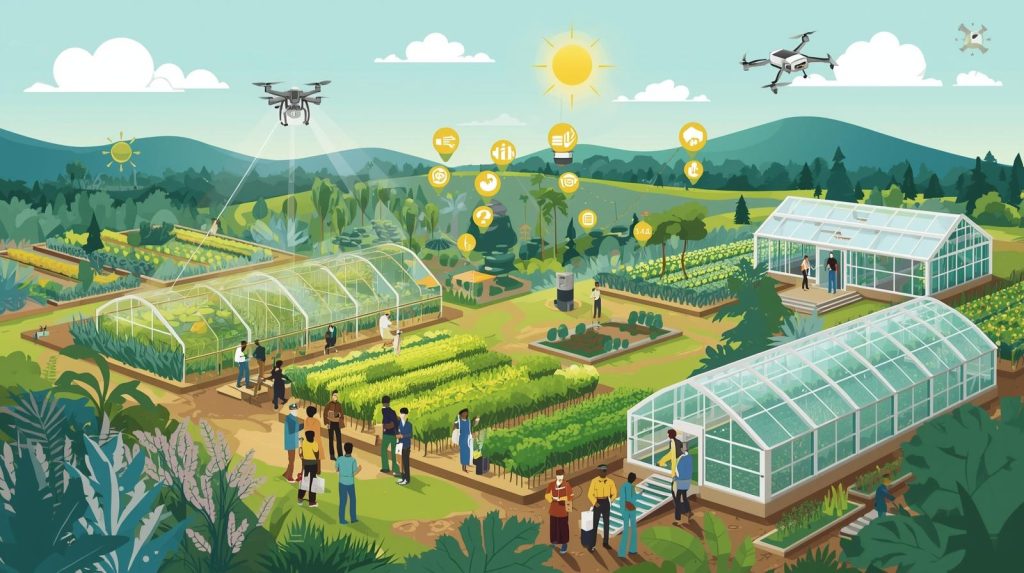
Greenhouse farming represents one of the most transformative smart farming technologies available to Kenyan farmers. By creating controlled growing environments, greenhouses enable year-round production of high-value crops, protection from extreme weather events, dramatic yield increases (3-5 times open field production), superior product quality commanding premium prices, and efficient resource use through precise irrigation and fertigation.
Kilimokona provides comprehensive greenhouse solutions including UV-treated polythene sheeting that lasts 3-5 years in Kenya’s intense equatorial sunlight, shade nets in various densities for temperature and light management, insect nets that exclude pests while allowing ventilation, greenhouse-specific drip irrigation systems, growing media including coconut coir for soilless cultivation, seedling trays and propagation equipment, crop support systems for vertical training of tomatoes and cucumbers, and climate monitoring equipment (thermometers, hygrometers).
The economics of greenhouse farming are compelling. A standard 8×24 meter greenhouse (approximately 200 square meters) can cost KSh 150,000-250,000 to establish depending on specifications. However, this same greenhouse can produce tomatoes worth KSh 300,000-500,000 per season with proper management—two to three growing cycles per year. Many successful greenhouse farmers in Kiambu, Naivasha, and other horticultural zones have built thriving businesses starting with a single greenhouse and expanding as profits accumulate.
Farm Mechanization: Working Smarter, Not Harder
While many Kenyan farms remain labor-intensive, selective mechanization can dramatically improve efficiency and reduce production costs. Kilimokona supplies appropriate mechanization tools for different farm scales.
For Smallholder Farmers: Quality hand tools including precision-forged jembes, sharp pangas and slashers, durable rakes and spades, efficient manual sprayers (8-20 liters), and harvesting equipment. While basic, quality hand tools last longer and work better than cheap alternatives, reducing replacement costs and physical strain.
For Medium-Scale Farms: Power tillers for mechanical land preparation, motorized knapsack sprayers covering more area with less effort, mechanical seeders ensuring proper spacing and depth, and post-harvest equipment including drying systems and storage solutions. These intermediate mechanization options significantly reduce labor requirements without the capital investment required for full tractor-based systems.
For Commercial Operations: Kilimokona connects larger farmers with suppliers of tractors and implements, mechanical harvesters, large-capacity spraying equipment, and irrigation automation systems. While these represent substantial investments, the labor savings and efficiency gains justify the costs for farms operating at commercial scale.
The Kilimokona Advantage: Why Thousands of Farmers Trust Us
Genuine Products, Guaranteed Results
In a market plagued by counterfeits, Kilimokona’s commitment to authenticity sets it apart. Every product—from seeds and fertilizers to irrigation components and crop protection chemicals—is sourced directly from authorized manufacturers and distributors. This authentication matters tremendously. Fake pesticides fail to control pests, requiring repeated applications that increase costs while crop damage accumulates. Counterfeit seeds produce poor yields or fail to germinate entirely. Substandard irrigation components leak, clog, or break prematurely.
Kilimokona’s customers consistently report improved results precisely because they’re using genuine products that work as intended. A farmer using authentic fungicide controls late blight with one or two applications instead of five or six sprays of diluted counterfeits. Certified seeds germinate uniformly, establishing strong plant stands that translate to higher yields. Quality drip lines deliver water consistently for multiple seasons rather than failing after weeks.
Convenient Digital Access
Traditional agricultural supply chains required farmers to travel to urban centers, navigate crowded markets, physically inspect products, transport heavy purchases back to farms, and often settle for whatever was locally available. Kilimokona has revolutionized this experience through its comprehensive online platform and mobile app.
Farmers can now browse products from their smartphones, comparing options and prices from home or even while in the field. Detailed product descriptions, application guides, and customer reviews help inform purchasing decisions. Multiple secure payment options including M-PESA, bank transfers, and cash on delivery accommodate different preferences. Orders are delivered directly to farms within 24-48 hours across most of Kenya, eliminating transportation challenges.
This digital convenience is particularly transformative for farmers in remote areas. A vegetable farmer in Meru can access the same greenhouse polythene available in Nairobi. A maize farmer in Kitale can order the latest hybrid seed varieties without traveling to Eldoret. A dairy farmer in Nyandarua can get veterinary medicines delivered to their gate. Kilimokona brings the entire agricultural supply chain directly to farmers regardless of location.
Expert Technical Support
Quality products need quality information to deliver maximum value. Kilimokona provides comprehensive technical support through detailed online product guides and application instructions, agricultural blog posts addressing common farming challenges, customer service representatives with agricultural training, and connections to extension services and agronomists for complex questions.
This technical support helps farmers make informed decisions about product selection, understand proper application techniques, troubleshoot problems when they arise, and optimize their farming systems for maximum profitability. The combination of quality products and quality information creates a powerful formula for farming success.
Competitive Pricing and Promotions
Smart farming shouldn’t require unlimited capital. Kilimokona makes modern agricultural inputs accessible through competitive pricing across all categories, regular seasonal promotions timed to planting and growing cycles, bulk purchase discounts for larger farms or farmer groups, free delivery on orders above specified thresholds, and first-purchase discounts welcoming new customers.
These pricing strategies ensure that even smallholder farmers operating on tight budgets can access quality inputs. A farmer with limited capital might start with one roll of drip tape and gradually expand their system. Another might take advantage of seasonal seed promotions to try new varieties. Farmer groups can pool orders to qualify for bulk discounts, reducing per-unit costs for all members.
Real Success Stories: Kenyan Farmers Thriving with Kilimokona
From Subsistence to Commercial: Mary’s Transformation in Embu
Mary Wanjiku, a smallholder farmer in Embu County, exemplifies the transformative potential of smart farming supported by Kilimokona. Five years ago, Mary cultivated traditional crops using rain-fed methods on her two-acre farm, earning barely enough to support her family. Frequent droughts meant regular crop failures and mounting debts.
Everything changed when Mary attended a farmer training session on drip irrigation and decided to invest in a system from Kilimokona. Starting with just half an acre, she installed drip irrigation and began growing French beans for export markets. The results exceeded expectations. Water consumption dropped dramatically while yields tripled compared to her previous rain-fed production. The consistent water supply enabled her to grow two crops per year instead of depending on unreliable rainy seasons.
Within two growing seasons, Mary had recovered her irrigation investment and expanded to irrigate her entire two acres. She diversified into capsicums and snow peas—high-value crops impossible to grow reliably without irrigation. Today, Mary earns over KSh 400,000 annually from her farm, has educated her children through secondary school, and is helping neighboring farmers transition to modern farming methods. She sources all her seeds, fertilizers, and crop protection products from Kilimokona, trusting the quality that has powered her success.
Greenhouse Revolution: Peter’s Journey in Kiambu
Peter Mwangi started with one greenhouse on his quarter-acre plot in Kiambu County three years ago. Using Kilimokona’s greenhouse materials and drip irrigation systems, Peter began growing tomatoes. His attention to detail—proper variety selection, consistent fertigation, integrated pest management—produced exceptional results.
His first greenhouse generated over KSh 180,000 profit in its first 120-day growing cycle. Peter immediately reinvested in a second greenhouse. Within 18 months, he operated four greenhouses on rented land, producing tomatoes, cucumbers, and capsicums for Nairobi markets. Today, Peter employs six people, supplies several supermarkets, and has become a resource for other farmers interested in greenhouse production.
Peter attributes his success to three factors: quality greenhouse materials from Kilimokona that withstand Kenya’s climate, reliable drip irrigation that delivers consistent plant growth, and genuine agrochemicals that effectively control pests and diseases. He particularly appreciates Kilimokona’s prompt delivery—when he needs inputs urgently, orders arrive within 24 hours, preventing production delays.
Commercial Scale Success: Wilson’s Farm in Trans Nzoia
Wilson Kipchirchir manages a 50-acre commercial maize farm in Trans Nzoia County. As a progressive farmer, Wilson constantly seeks ways to improve efficiency and yields. His partnership with Kilimokona has transformed his operation.
Wilson purchases all his certified hybrid seeds from Kilimokona, ensuring proper germination and genetic purity. His fertilizer program—basal application of DAP followed by top-dressing with CAN—is precisely calibrated based on soil tests and purchased through Kilimokona at competitive bulk rates. For pest control, Wilson relies on registered insecticides that effectively manage fall armyworm and maize stem borers without the repeated applications required by counterfeit products.
The results speak for themselves. Wilson consistently harvests 35-40 bags per acre—well above Trans Nzoia’s average of 25-28 bags. This yield advantage, multiplied across 50 acres, generates hundreds of thousands of shillings in additional income annually. Wilson credits his superior yields to quality inputs, proper agronomic practices, and the reliability of Kilimokona’s supply chain that ensures he never faces input shortages during critical planting windows.
Implementing Smart Farming: Your Step-by-Step Guide
Step 1: Assess Your Current Situation
Begin with honest evaluation. What are your current yields compared to potential yields for your crops? Where are your biggest losses occurring—water shortage, pest damage, poor germination, soil fertility? What resources do you have available for investment? What technical knowledge and skills do you need to develop?
This assessment helps prioritize investments that will deliver the highest returns for your specific situation.
Step 2: Start with High-Impact Improvements
Rather than attempting to transform everything simultaneously, focus on changes that deliver maximum impact relative to investment. For most Kenyan farmers, three starting points offer exceptional returns.
Quality seeds represent relatively small investments with massive yield impacts. Switching from saved seed to certified hybrids typically costs KSh 3,000-5,000 per acre but can increase yields by 30-50%. This is perhaps the highest-return investment available in agriculture.
Proper soil fertility management addresses one of the most common yield-limiting factors. Many Kenyan soils are deficient in nitrogen, phosphorus, and other essential nutrients. Appropriate fertilizer application can double or triple yields, with the increased production value far exceeding fertilizer costs.
Basic irrigation transforms farming from gambling on rainfall to reliable production. Even simple systems dramatically reduce crop failure risk while enabling production during dry seasons when prices are highest.
Step 3: Source Quality Inputs from Kilimokona
Once you’ve identified priority improvements, source quality inputs through Kilimokona’s convenient online platform. Browse product categories relevant to your needs, read product descriptions and application guidelines, check for current promotions or bulk discounts, add items to your cart and complete checkout, and expect delivery to your farm within 24-48 hours across most of Kenya.
Step 4: Implement Proper Agricultural Practices
Quality inputs achieve their potential only when combined with good agronomic practices. Plant at appropriate times—early in the rainy season for rain-fed crops, anytime for irrigated systems. Maintain proper spacing—crowded plants compete for resources and yield less. Follow application instructions precisely—more is not better with pesticides and fertilizers. Monitor crops regularly—early detection of problems enables effective intervention. Keep records—documenting what works and what doesn’t guides future improvements.
Step 5: Measure Results and Reinvest
Track your yields, input costs, and revenues carefully. Calculate your return on investment for different improvements. Identify what worked best and where further improvements are possible. Reinvest profits strategically—often the best investment is expanding what’s already working.
Many successful Kenyan farmers follow a virtuous cycle: small initial improvements generate profits, profits fund further improvements, larger improvements generate larger profits, and continued reinvestment builds thriving agricultural enterprises.
The Future of Kenyan Agriculture: Opportunities and Challenges Ahead
Emerging Opportunities
Kenya’s agricultural sector faces unprecedented opportunities. Growing urban populations create expanding markets for fresh produce, dairy, and poultry products. Export markets for horticultural crops, coffee, tea, and cut flowers continue growing. Value addition—processing agricultural products into higher-value forms—offers opportunities for increased profitability. Agrotech innovation is creating new solutions specifically designed for African farming conditions.
Agritech startups in Kenya have surged by over 25% recently, driven by young entrepreneurs. This innovation ecosystem is creating solutions for market access, finance, technical advice, and supply chain efficiency that will further accelerate agricultural transformation.
Persistent Challenges
Despite progress, significant challenges remain. Climate variability continues threatening rain-dependent agriculture. Land fragmentation—farms divided into smaller parcels each generation—reduces efficiency. Access to affordable credit limits investment capacity for many farmers. Market volatility creates uncertainty around profitability. Soil degradation from years of continuous cropping without adequate fertility replenishment reduces productive potential.
Addressing these challenges requires coordinated efforts from government, private sector, and farmers themselves. Policy support for agricultural investment, improved rural infrastructure, continued innovation in agricultural technology, and farmer education and training all play crucial roles.
Kilimokona’s Role in Agricultural Transformation
As Kenya’s agriculture modernizes, Kilimokona is positioned to play an increasingly important role. By making quality inputs accessible across all regions, the company democratizes access to the tools of modern farming. By maintaining competitive pricing and convenient delivery, Kilimokona reduces barriers to agricultural improvement. By providing technical information alongside products, Kilimokona supports farmers in making informed decisions and implementing best practices.
Looking ahead, Kilimokona continues expanding its product range, enhancing delivery networks to reach even more remote areas, developing educational content addressing farmer needs, partnering with financial institutions to improve input financing options, and building farmer communities for knowledge sharing and collective bargaining.
Taking Action: Your Journey to Smart Farming Starts Today
Agricultural transformation isn’t about overnight miracles—it’s about consistent improvements compounding over time. Every successful commercial farmer in Kenya started as a beginner. Every thriving greenhouse operation began with one structure. Every efficient irrigation system started with a single investment decision.
Your smart farming journey starts with a single step: accessing quality inputs that work. Whether you’re establishing your first drip irrigation system, planting certified seeds for the first time, implementing proper pest management, or launching a greenhouse enterprise, Kilimokona provides the products, guidance, and support you need to succeed.
Visit Kilimokona’s online platform today. Download the mobile app. Browse the comprehensive product catalog. Read success stories from farmers like you. Take advantage of current promotions. Place your first order. Experience the difference that genuine, quality agricultural inputs make in your farming operation.
Kenya’s agricultural future is bright—and that future is built one farm, one farmer, one smart decision at a time. Join the thousands of Kenyan farmers who have chosen Kilimokona as their partner in agricultural success. Your transformation starts now.
Frequently Asked Questions About Smart Farming with Kilimokona
Q: Is smart farming only for large commercial farms? A: Absolutely not. Smart farming principles apply at any scale. Even a quarter-acre farmer benefits from quality seeds, proper fertilization, and efficient irrigation. Many smart farming investments—like certified seeds or knapsack sprayers—cost very little but deliver significant returns.
Q: How much capital do I need to start smart farming? A: Start where you are with what you have. Even small investments in quality inputs deliver measurable improvements. Many farmers begin with one improvement—perhaps irrigation on half an acre—and expand as profits accumulate.
Q: Does Kilimokona provide installation services for irrigation systems? A: Kilimokona supplies all irrigation components with detailed installation guides. For farmers needing professional installation, connections to experienced installers can be provided. Many farmers successfully install simple drip systems themselves following provided instructions.
Q: How do I know which products are right for my farm? A: Product descriptions on Kilimokona’s platform provide guidance on appropriate uses. Customer service representatives can answer specific questions. For complex decisions, consider consulting with an agricultural extension officer in your area.
Q: Can I visit a physical Kilimokona store? A: Kilimokona operates primarily through its digital platform, enabling competitive pricing and wide product selection. However, customer service is readily accessible via phone, WhatsApp, and email for any questions or assistance needed.
Q: What if products arrive damaged? A: Kilimokona has clear policies for damaged goods. Contact customer service immediately upon delivery if any products arrive damaged, and arrangements will be made for replacement.
Q: Are financing options available for larger purchases? A: While Kilimokona itself doesn’t provide credit, partnerships with financial institutions are being developed. Many farmers successfully use agricultural credit from banks or SACCOs to finance input purchases.
Q: How can I learn more about proper agricultural practices? A: Kilimokona’s blog features regular articles on agricultural best practices. Product pages include application guidelines. Customer service can provide basic guidance, and extension services offer more comprehensive training and advice.
Conclusion: Building Kenya’s Agricultural Future Together
Kenya stands at a pivotal moment in agricultural history. The challenges are real—climate change, population pressure, resource scarcity, market uncertainties. But so are the opportunities. Modern technologies, improved crop varieties, efficient irrigation, and data-driven management are transforming what’s possible in Kenyan agriculture.
Kilimokona is proud to stand alongside Kenyan farmers in this transformation, providing the quality inputs, modern equipment, and technical support that turn agricultural potential into profitable reality. From the smallholder in Western Kenya planting their first certified seeds to the commercial greenhouse operator in Kiambu producing premium vegetables to the irrigation farmer in Machakos growing crops year-round, Kilimokona serves as a trusted partner in agricultural success.
The path forward is clear: embrace smart farming principles, invest in quality inputs, implement proper agronomic practices, measure results and continuously improve, and reinvest profits strategically for continued growth. This is how individual farms transform. This is how Kenya’s agricultural sector modernizes. This is how food security is achieved and rural prosperity is built.
Your role in Kenya’s agricultural transformation begins with a single decision: to demand quality, to embrace improvement, to partner with suppliers who genuinely support your success. Choose Kilimokona. Choose genuine quality. Choose agricultural transformation.
Ready to transform your farm? Visit Kilimokona online or download the app today. Quality inputs, expert support, convenient delivery—everything you need for smart farming success in Kenya.
Keywords: Kilimokona smart farming Kenya, modern agriculture Kenya, drip irrigation Kenya, greenhouse farming Kenya, precision agriculture Kenya, agricultural transformation Kenya, quality farm inputs Kenya, climate-smart agriculture Kenya, irrigation systems Kenya, certified seeds Kenya, farm mechanization Kenya, sustainable farming Kenya, agritech Kenya, agricultural innovation Kenya, profitable farming Kenya